















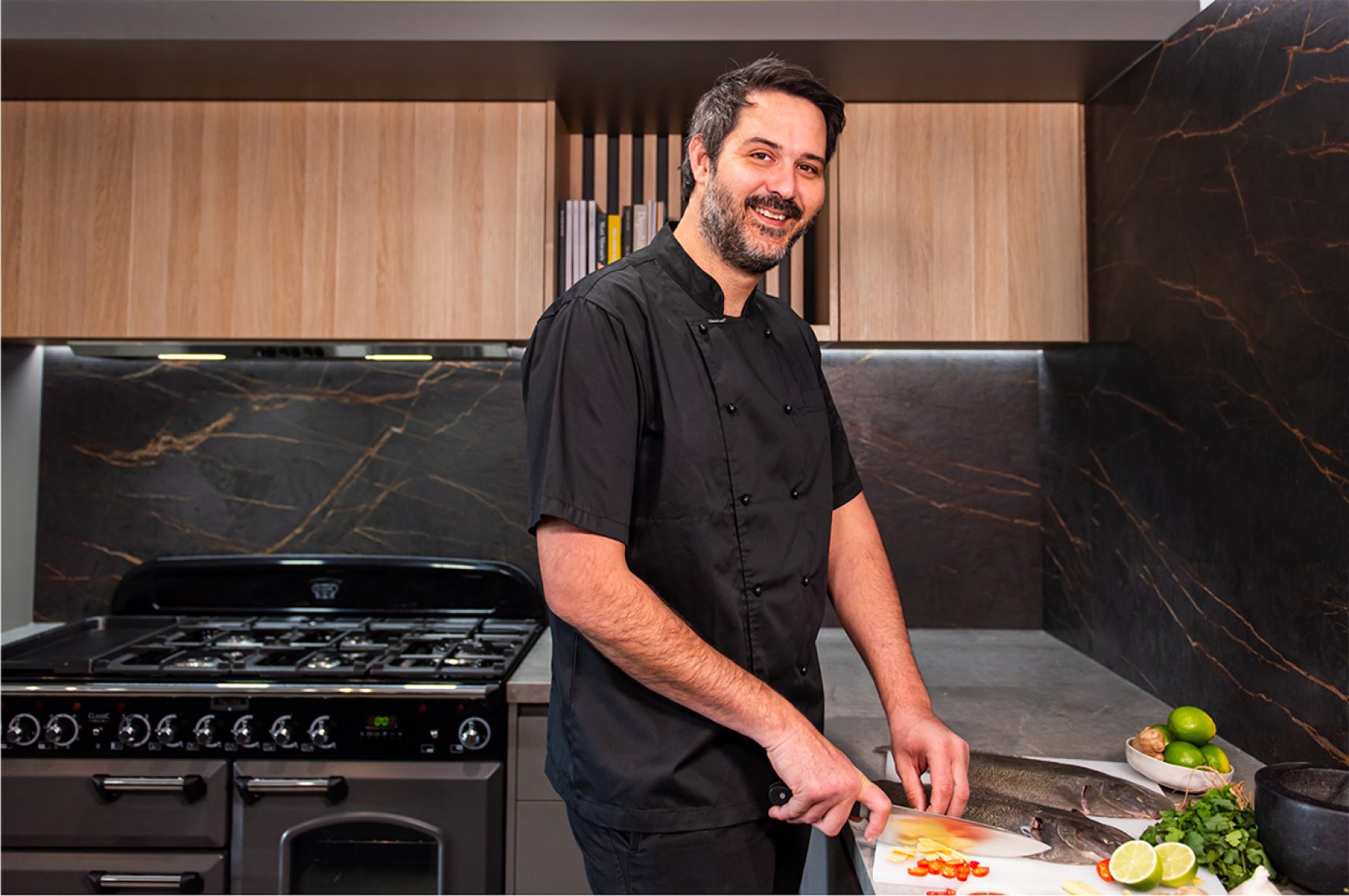
Multi-award-winning chef Seth James has built his reputation on two things: knowing Western Australian seafood inside out, and cooking it the way he'd actually want to eat it. "If you sit down and eat your own food and you're happy with it, that's going to translate well onto a plate for the customer," he says.
James’ current venture is at Fins in Bicton, the retail offshoot of renowned WA seafood wholesaler Fins. Customers can buy expertly-sourced fresh seafood to cook at home, or have it cooked to perfection by the kitchen staff, ready to enjoy in Fins’ bar area with a WA beer.
With his depth of seafood knowledge and experience, James gets a lot of questions from customers. The most common one: how do you cook seafood with confidence, so it comes out well? His answer, increasingly, is the combi steam oven.
THE COMBI STEAM ADVANTAGE
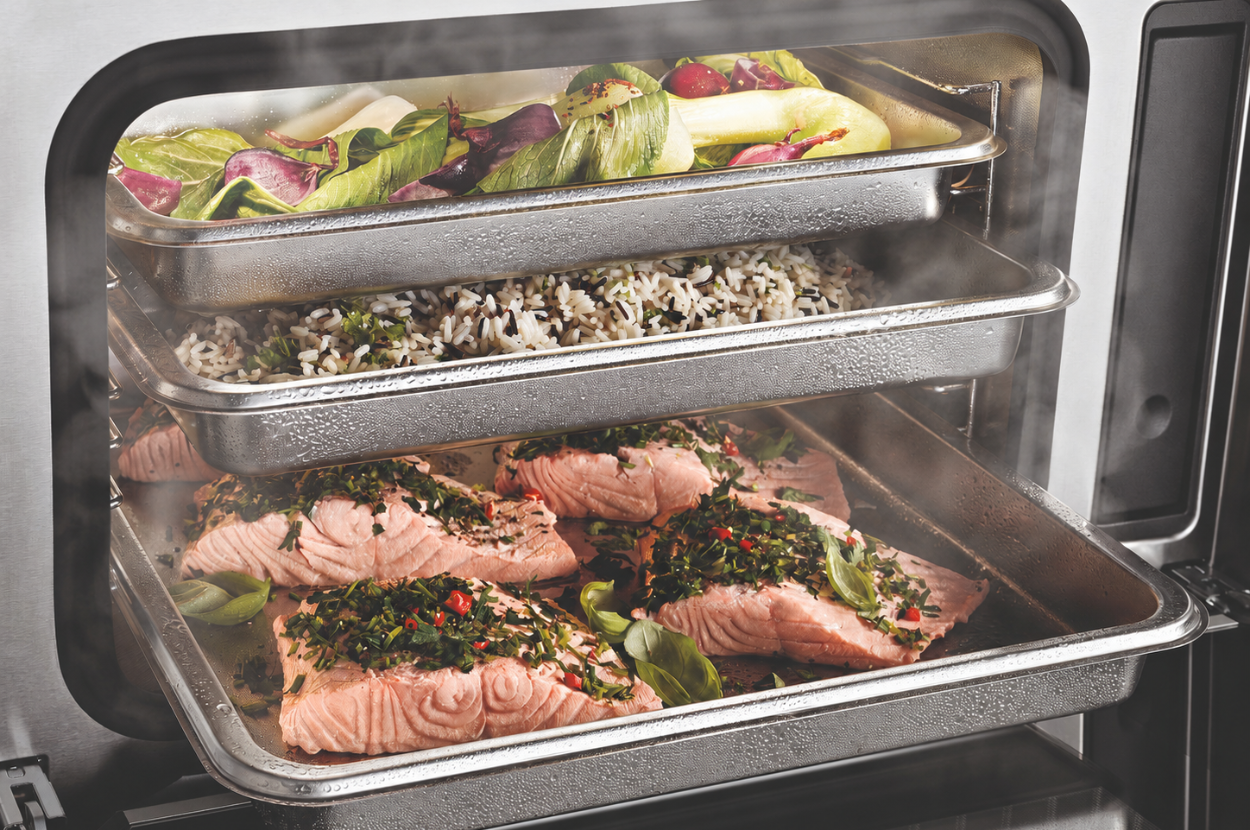
"With combi steam, you're using a high temperature so that it caramelises things," James explains, describing a misoglazed fish dish he cooks often. "You get this beautiful crust on the outside, but the oven’s still protecting the inside, because it's got that steam running through it, so it's not drying out." The result, he says, is the best of both worlds: a proper Maillard crust with the moisture retained underneath.
STEAM OVENS: FLEXIBLE AND HERE TO STAY
For James, the real strength of a combi steam oven is the ability of the oven to adapt to different seafood. "Ours goes up to 300 degrees," he says. Of robust, meaty fish types, "the hotter it is, the quicker you get that crust on the outside without overcooking it too much." Delicate species get a different treatment: "If you're steaming a piece of coral trout, you want it on a lower temperature, where it's gentle and you're imparting flavour."
This flexibility is why he thinks combi steam technology matters for home cooks, not just restaurants. "For beginners, it's going to be a lot easier to cook seafood and not dry it out," he says. Asked whether combi steam is a passing trend, he doesn't hesitate: "I'd want to hope it's a permanent fixture. It's very versatile for a lot of applications, it's a better way to cook than plenty of other methods."
PERSISTENCE BUILDS CONFIDENCE
James' advice for building cooking confidence at home is simple: just keep at it. "You find a method that works for you, and you just keep trying it until you have something you like," he says. It's less about precision and more about repetition.
The one quick check he swears by when it comes to cooking fish, combi steam or otherwise, is using a metal skewer: "Once it goes through without any resistance, it's ready. If the flesh still looks blue, or there’s resistance, it's not cooked — you want a nice white, opaque colour."
CAST A WIDER NET
With sustainability and availability always front of mind, James is on a quiet mission against seafood snobbery: "The biggest misconception is the variety of fish you can actually eat," he says. With species like pink snapper and red emperor under pressure, James wants people cooking different types of fish: "There's a lot of other fish just as good, but unknown, because people don't know how to cook them." He recommends people speak with their fishmongers about the day’s catch and don’t be tied to only one or two species when seafood shopping and cooking. "Don't be afraid to try something new."
Download Seth James' Combi Steam Seafood Chart here; and with the above tips you’re on your way to mastering perfect seafood in your combi steam oven!